A Food Map of Haiti: The Dishes Each Department Is Known For
Haitian food changes as you cross the island. From Artibonite rice to Jérémie konparèt, here is what each of Haiti's ten departments is known for on the plate.
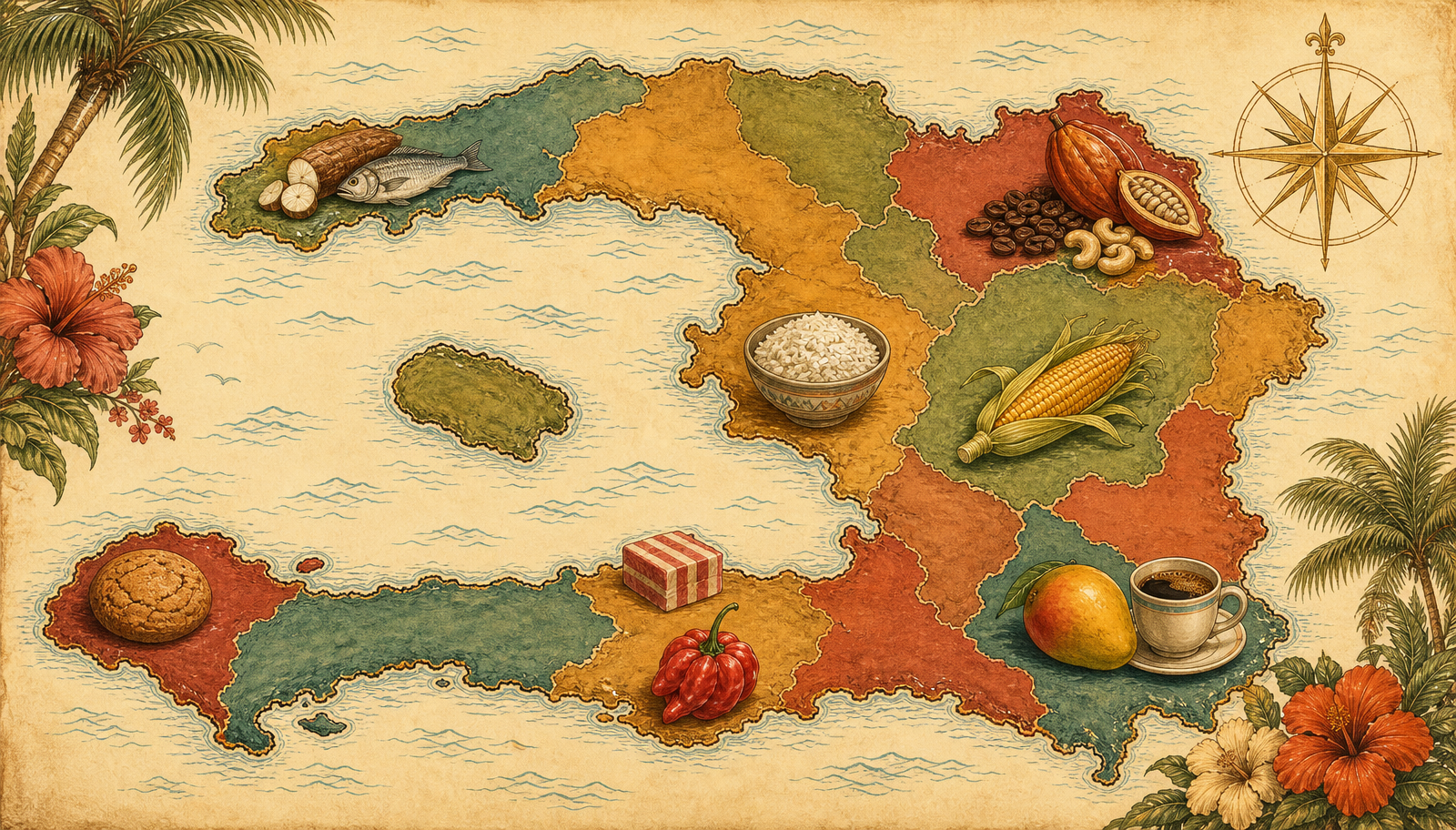
Ask five Haitians where the best food in Haiti comes from and you will get eleven answers, three of them shouted. Fair. Haitian cooking is one national kitchen, but the island is small and stubborn: each of its departments grows, catches, and cooks something it considers superior to whatever the neighbors are doing. And honestly, the neighbors usually agree.
Here is a tour of Haiti by plate, department by department. No passport required, appetite strongly recommended.
Ouest: mountain vegetables and dous makòs
The Ouest holds Port-au-Prince, but its real contributions to the national table come from outside the city. Kenscoff, up in the cool mountains above the capital, is the island's vegetable basket — carrots, leeks, and cabbage that end up in légume stews all over the country. And down the coast, Petit-Goâve is the undisputed home of dous makòs, the striped milk-and-spice fudge that every Haitian grandmother can identify blindfolded.
Artibonite: the rice bowl
Drive north out of the capital and the land flattens into the Artibonite valley — Haiti's rice country. This is where most of the island's rice is grown, which means Artibonite feeds the national dish itself: diri ak pwa, rice and beans, in all its forms. If Haiti had a pantry, the Artibonite would be it.
Centre: corn country
Inland, the Centre department — Hinche, Mirebalais — is corn land. This is the home of mayi moulen (cornmeal, often cooked with beans or smoked herring) and akasan, the beloved corn-milk drink that Haitians will defend as a breakfast, a dessert, and a medicine depending on the argument. Where Artibonite does rice, Centre answers with corn, and both are right.
Nord: cashew, cassava, cacao and coffee
The Nord, anchored by Cap-Haïtien, sits in serious agricultural history. The hills here have grown cacao and coffee for centuries, and Haitian coffee — shade-grown, strong, and usually sweetened enough to count as dessert — owes much of its reputation to northern mountain farms. The north is also cashew country (noix), roasted and sold along the roads, and cassava land, where manyok becomes the flatbread kasav that has fed the island since long before colonization. Cap-Haïtien itself is a coastal city, so the table swings easily between mountain crops and fresh fish by the water.
Nord-Est: cassava and the catch of the day
Over by Fort-Liberté and the bay, the Nord-Est leans on two pillars: cassava (manyok), turned into kasav, and seafood from one of Haiti's most storied bays. Simple, ancient, and absolutely not interested in changing.
Nord-Ouest: keep it simple, keep it good
The Nord-Ouest — Port-de-Paix, Môle-Saint-Nicolas — is fishing and farming country. Cassava again, goat, and whatever the boats brought in that morning. It is the department least interested in showing off, which is usually a sign the food is excellent.
Grand'Anse: Jérémie, the sweet tooth of Haiti
If Haiti has a dessert capital, it is Jérémie. Grand'Anse is famous for konparèt, the dense ginger-spiced bread that is somehow both a snack and a commitment, and for kat-kat, the crisp flat crackers Haitians abroad hoard in carry-on luggage like contraband. The department also grows prized cacao, so the sweets here start at the source.
Sud: seafood and fire
Down in Les Cayes and across the Sud, two things define the plate: the sea and the heat. This is seafood country — fish, conch (lambi), lobster when the season is right — and it is also the land of piman bouk, the scotch-bonnet-style pepper that Haitians treat less like an ingredient and more like a personality trait. The Sud's heat is not a gimmick; it is the seasoning of daily life.
Sud-Est: Jacmel, mango season, and coffee
The Sud-Est, home of Jacmel, is famous for two harvests that make Haitians emotional: coffee from the mountain slopes, and the francisque mango — the small, fragrant, fiber-soft mango that ruins all other mangoes for you. When francisque season hits, Haitian group chats in three time zones start posting photos. It is a whole cultural event.
From the island to the diaspora
Here is the beautiful part: none of this stayed home. Every department's cooking packed a suitcase. Jérémie's konparèt shows up at family parties in Montreal. Artibonite rice and Les Cayes heat anchor kitchens from Boston to Orlando. Northern cacao and coffee turn up in Brooklyn kitchens. Haitian restaurants abroad are really a set of regional kitchens sharing one dining room — and when a cook tells you their family is from Jacmel or Cap-Haïtien, they are quietly telling you what your plate is about to taste like.
Frequently asked questions
What food is Haiti most famous for? Griot with pikliz is the best-known national dish, but diri ak pwa (rice and beans) is the true everyday foundation — and much of that rice comes from the Artibonite valley.
What is konparèt and where is it from? Konparèt is a dense, ginger-spiced bread most associated with Jérémie, in Haiti's Grand'Anse department. It travels well, which is why the diaspora treats it like edible gold.
Which part of Haiti is known for seafood? The southern coast — especially the Sud around Les Cayes — is best known for fish, conch, and lobster, alongside the famously fiery piman bouk peppers.
What is dous makòs? A striped fudge of milk, sugar, and warm spices, the signature sweet of Petit-Goâve in the Ouest department.
Does Haitian food change by region? Yes. The core dishes are national, but each department has specialties shaped by what it grows and catches — corn in the Centre, rice in Artibonite, cashew and cassava in the Nord, cacao and coffee in the mountains of the Nord, Sud-Est, and Grand'Anse.
Frequently asked questions
What food is Haiti most famous for?
Griot with pikliz is the best-known national dish, but diri ak pwa (rice and beans) is the everyday foundation, and much of that rice is grown in the Artibonite valley.
What is konparèt and where is it from?
Konparèt is a dense, ginger-spiced bread most associated with Jérémie in Haiti's Grand'Anse department.
Which part of Haiti is known for seafood?
The southern coast, especially the Sud around Les Cayes, is known for fish, conch, and lobster, alongside the fiery piman bouk peppers.
What is dous makòs?
Dous makòs is a striped fudge of milk, sugar, and warm spices, the signature sweet of Petit-Goâve in the Ouest department.
Does Haitian food change by region?
Yes. Core dishes are national, but each department has specialties shaped by local harvests — corn in the Centre, rice in Artibonite, cacao and coffee in the mountains.
Discover more Haitian-owned businesses across the diaspora.
Browse the directory →