A Beginner's Glossary of Haitian Food
Griot, pikliz, epis, bannann peze — the Haitian menu words you keep hearing, finally explained. A beginner's glossary to the dishes, drinks, and seasonings of Haitian cooking.
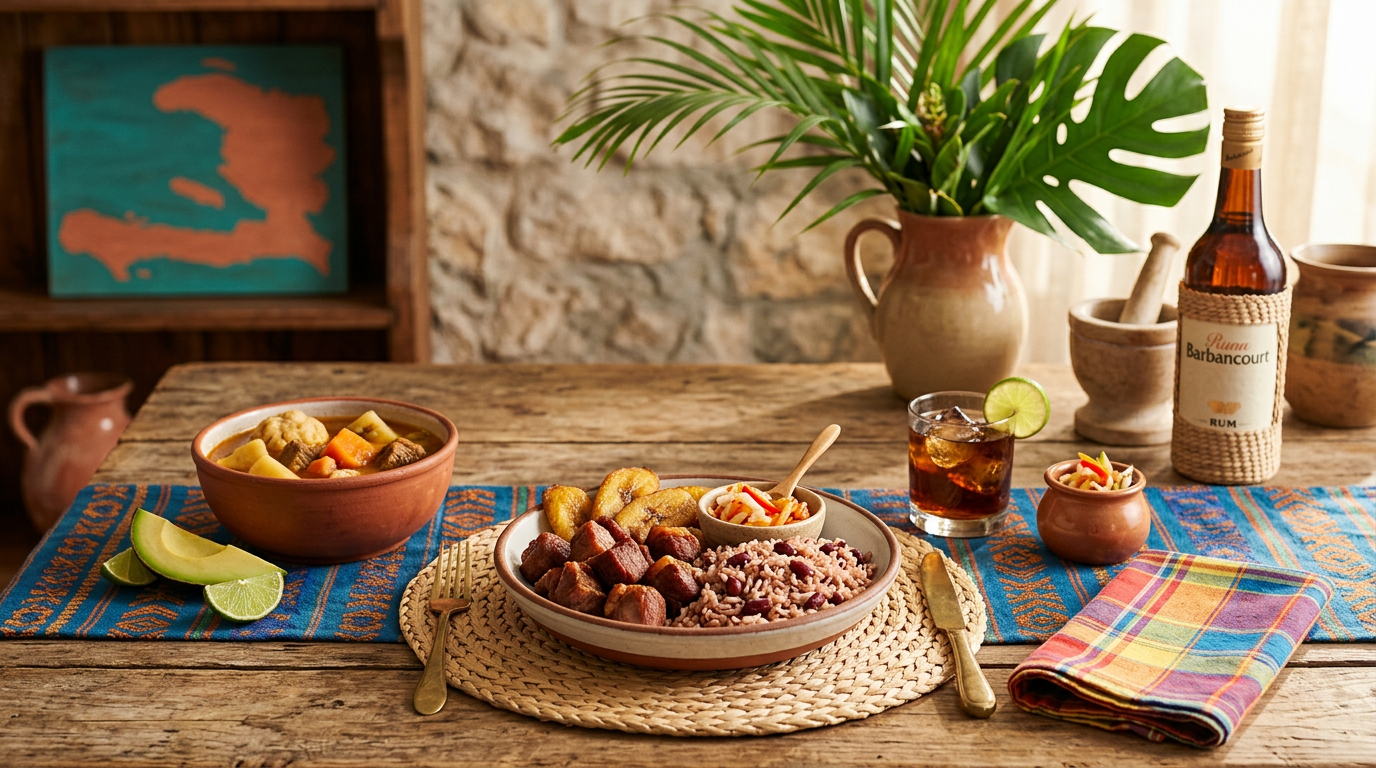
Walk into a Haitian restaurant for the first time and the menu can feel like a pop quiz. Griot? Lalo? Dous makòs? Your friend orders in fluent Kreyòl, the plate arrives, and it is so good you immediately regret not knowing what any of the words meant sooner.
Consider this your cheat sheet. Here are the Haitian food words worth knowing — what they are, how to say them, and when to order them. No French required, appetite strongly recommended.
The foundations
These are the building blocks. Learn these five words and you can decode half of any Haitian menu.
Epis (eh-pees). The seasoning base that starts nearly everything: garlic, peppers, scallions, herbs, and citrus blended into a green paste. If a Haitian dish tastes like it has a backstory, that backstory is epis. Every household guards its own recipe like a family secret, because it is one.
Diri ak pwa (dee-ree ahk pwah). Rice and beans — the everyday anchor of the Haitian plate. Diri kole is rice cooked with the beans in the same pot, usually red kidney beans or pwa kongo (pigeon peas). When the rice is cooked with black djondjon mushrooms, it becomes diri djondjon, earthy and dark and worth ordering whenever you see it.
Sòs pwa (sauce pwah). A silky bean purée poured over rice — think of it as Haiti's answer to gravy, except it has been perfected over generations.
Bannann peze (bah-nahn peh-zeh). Twice-fried green plantains, smashed flat and crisped. Salty, crunchy, and structurally essential next to anything fried. You will eat three before you realize you were supposed to share.
Legim (leh-gim). A slow-cooked vegetable stew — eggplant, cabbage, carrots, chayote — mashed down into something rich and hearty, often with crab or beef. The name just means "vegetables," which undersells it completely.
The fried and the famous
Griot (gree-yoh). The headliner. Pork shoulder marinated in citrus and epis, boiled until tender, then fried until the edges go dark and crisp. Served with pikliz and bannann peze. If you order one thing to start your Haitian food education, this is it.
Pikliz (pee-kleez). The fiery pickled slaw of cabbage, carrots, and scotch bonnet peppers in vinegar that crowns griot and everything else fried. It is spicy, bright, and habit-forming. Haitian fridges have a jar of it the way other fridges have ketchup.
Fritay (free-tie). Not one dish but the whole glorious category of fried street food: griot, marinad, accra, bannann peze, and more, sold by vendors from sizzling pots.
Marinad (mah-ree-nahd). Light, puffy fried fritters, often with chicken or herring folded into the batter. Breakfast, snack, or party food — marinad does not discriminate.
Accra (ah-krah). Crispy fritters made from grated malanga (a root vegetable) or black-eyed peas, seasoned and fried golden.
Tasso (tah-so). Fried or dried seasoned meat — beef, goat, or turkey — chewier and more intensely spiced than griot. Goat tasso with bannann peze is a combination that has ended diets.
Pate kòde (pah-teh koh-deh). A fried turnover stuffed with seasoned meat, herring, or hot dogs. The street-corner pastry of champions.
The mains and the celebrations
Soup joumou (soup zhoo-moo). The squash soup that Haiti eats every January 1st to celebrate independence — a dish once forbidden to the enslaved, reclaimed as a symbol of freedom, and recognized by UNESCO in 2021. It is rich with beef, vegetables, pasta, and history. Yes, it deserves its own article, and yes, we have one.
Lalo (lah-loh). A dark, velvety stew made from jute leaves, usually cooked with crab or beef. The pride of the Artibonite, and an acquired taste that most people acquire in exactly one bite.
Kalalou (kah-lah-loo). Okra stew, often with crab and meat. If you like gumbo, kalalou is the conversation Haiti's been having about okra for centuries.
Diri ak djon djon — see diri djondjon above, and order it.
Sòs vyann / taso kabrit. Stewed or fried goat, fall-apart tender in a peppery sauce. Haitian cooks treat goat with the seriousness it deserves.
Pwason fri / pwason an sòs. Fried whole fish or fish in Creole sauce — a specialty of the southern coast, best eaten within sight of the water that provided it.
Breakfasts and porridges
Haitian breakfast culture runs on labouyi — porridge. The main dialects:
Mayi moulen (mah-yee moo-len). Cornmeal porridge — or, cooked savory, cornmeal served like polenta with beans or avocado on the side. Comfort in a bowl either way.
Akasan (ah-kah-sahn). A silky drink of corn flour, milk, vanilla, and cinnamon, sold chilled by street vendors in Haiti and hoarded by the diaspora abroad.
Labouyi bannann / labouyi farin. Plantain porridge and wheat porridge — warm, spiced, and the reason many Haitians are suspicious of anyone who skips breakfast.
Sweets and drinks
Konparèt (kon-pah-ret). A dense, ginger-spiced quick bread, the signature of Jérémie in Grand'Anse. Somewhere between bread and cake, and entirely its own thing.
Dous makòs (doos mah-kohs). Striped fudge of milk, sugar, and warm spices from Petit-Goâve. The stripes are tradition; the disappearing act once it's unwrapped is physics.
Tablet pistach / tablet kokoye. Crunchy bars of roasted peanuts or coconut bound in caramelized sugar. Haiti's original energy bars.
Pen patat (pen pah-taht). Sweet potato pudding baked with banana, coconut, and spices — dessert that counts as a vegetable if you squint.
Rapadou (rah-pah-doo). Unrefined cane sugar in solid form — the sweetness behind many of the treats above, with a molasses depth white sugar can only dream of.
Kremas (kreh-mahs). Haiti's celebratory coconut cream drink — sweet, spiced, and spiked with rum at weddings, holidays, and any gathering with ambitions. Handle with respect.
Jus cerise, jus korosol, jus grenadia. Fresh juices of sour cherry, soursop, and passion fruit. Haitian juice culture is serious; say yes.
The heat department
Piman bouk (pee-mahn book). The scorching pepper of the Sud — a variety of scotch bonnet with a cult following and zero mercy. Approach pikliz made with it accordingly.
Ti-malice. A sharp onion-and-pepper sauce served over rice, named for a legendary trickster. The story goes he made it spicy to keep a mooching friend from eating his food. It did not work, and we are all better for it.
A quick pronunciation note
You will see the same words spelled three ways — griot and griyo, pikliz and pickliz — because Kreyòl spelling standardized recently and menus answer to grandmothers, not dictionaries. Point with confidence. The food will understand.
The best way to use this glossary is to take it to a Haitian restaurant near you. Browse Haitian-owned restaurants, markets, and caterers on ZoeAtlas and go practice. Start with the griot. Everybody starts with the griot — and nobody regrets it.
Frequently asked questions
What are the most popular Haitian dishes for beginners?
Start with griot (marinated fried pork) served with pikliz (spicy pickled slaw) and bannann peze (twice-fried plantains). Diri ak pwa — rice and beans — is the everyday foundation of the Haitian plate.
What is epis in Haitian cooking?
Epis is the seasoning base that starts most Haitian dishes: garlic, peppers, scallions, herbs, and citrus blended into a paste. Every family has its own recipe.
What does fritay mean?
Fritay is the whole category of Haitian fried street food — griot, marinad fritters, accra, and bannann peze — sold by vendors from sizzling pots.
What is the difference between griot and tasso?
Both are fried meats, but griot is citrus-marinated pork shoulder, boiled then fried, while tasso is more heavily seasoned and dried or fried beef, goat, or turkey with a chewier texture.
What is soup joumou?
A rich squash soup Haitians eat every January 1st to celebrate independence. Once forbidden to the enslaved, it became a symbol of freedom and was recognized by UNESCO in 2021 as intangible cultural heritage.
Discover more Haitian-owned businesses across the diaspora.
Browse the directory →