10 Haitian Foods and Condiments You Can Barely Find in the US
Lalo, piman bouk, djondjon, konparèt and more — ten Haitian foods and condiments the diaspora can rarely find on American shelves.
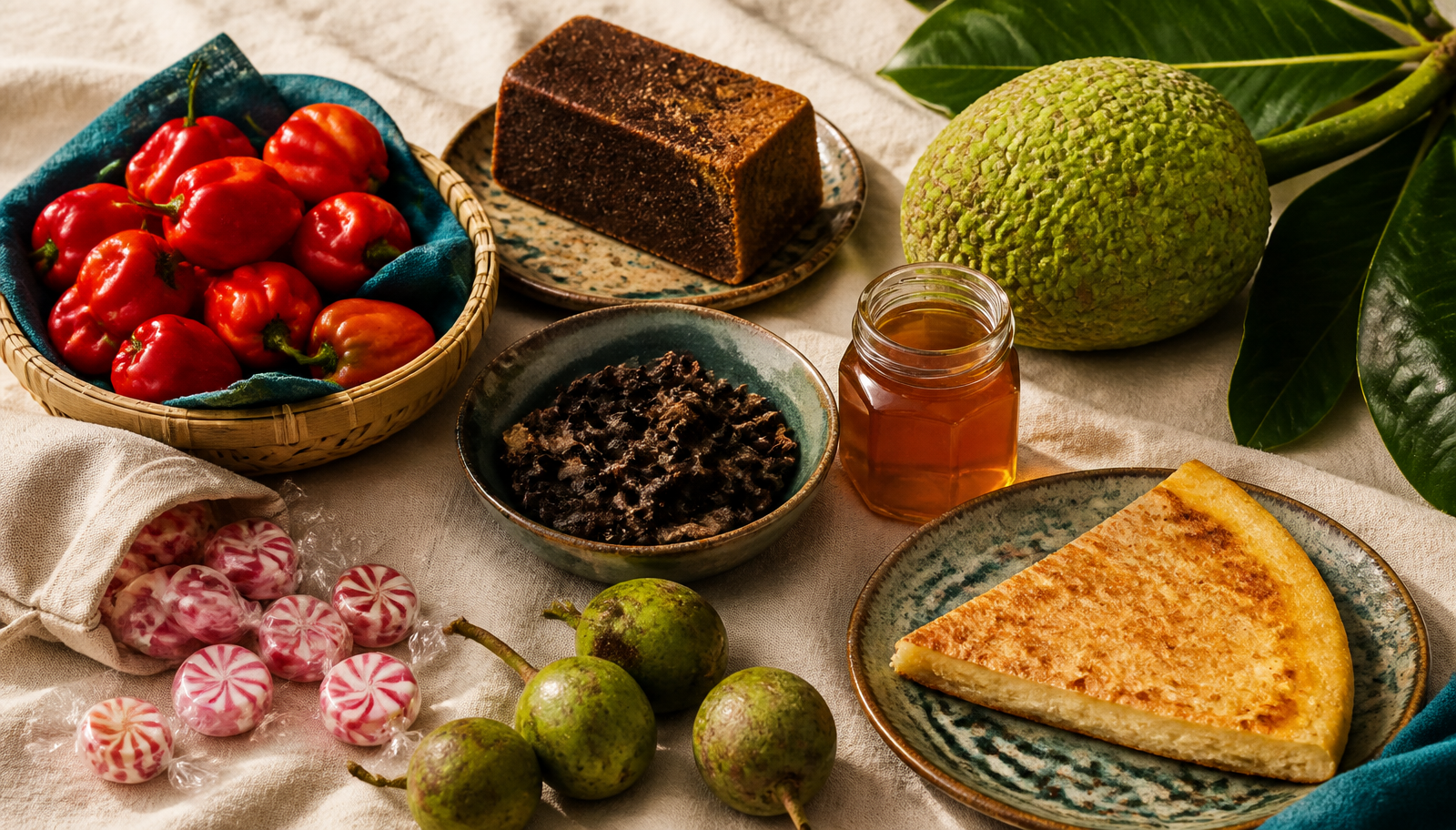
America has everything. Three kinds of oat milk. Forty flavors of sparkling water. A chip for every mood. And yet, if you grew up Haitian, there is a short list of foods that make you stare down the aisle of a beautiful, fully stocked American supermarket and whisper: you have nothing for me.
Some of these can be hunted down in Haitian markets in Miami, Brooklyn, or Montreal if you know a guy who knows a guy. Most you wait for until somebody's aunt flies in. Here are ten Haitian foods and condiments that are genuinely hard to find in the US.
1. Piman bouk
The fiery pepper of the Sud, especially around Les Cayes. Scotch bonnets exist in the US, yes — but Haitians will tell you, hand on heart, that it is not the same. Piman bouk is hotter, fruitier, and is treated in Haitian kitchens as a seasoning philosophy, not an ingredient.
2. Djondjon
The small black mushroom that turns rice a dramatic gray-black and perfumes it like nothing else on earth. Dried djondjon shows up in a handful of Haitian specialty shops, but outside diaspora neighborhoods? Good luck explaining to a grocer why you need a mushroom that looks like soil and tastes like heaven.
3. Konparèt
Jérémie's dense, ginger-spiced bread. It is baked to survive journeys — which is lucky, because the journey to a US store shelf is one it rarely completes. The konparèt in American Haitian homes has almost always crossed a border in someone's luggage.
4. Lalo (real jute leaves)
The silky, deep-green stew of the Artibonite — crab or meat, jute leaves, and that unmistakable texture Haitians crave and everyone else has opinions about. Frozen or dried jute leaves exist in a few African and Haitian markets, but they are to fresh lalo what instant coffee is to coffee. Finding the real leaves, fresh, in the US is a minor miracle — which is why a proper plate of lalo with white rice hits like a homecoming.
5. Dous makòs
Petit-Goâve's striped fudge — milk, sugar, warm spices, patience. Some Haitian bakeries in Miami and New York make versions of it, but the real thing, carried from Petit-Goâve, remains a special-occasion artifact.
6. Fresh kasav
Cassava flatbread, one of the oldest foods on the island. Packaged cassava bread exists in Latin markets, but fresh kasav — soft-edged, warm, made days not months ago — is a flight-to-Haiti experience.
7. Lam veritab (fresh breadfruit)
You can find frozen breadfruit. You cannot find a just-picked breadfruit, roasted or boiled the same week, in an American grocery store. The frozen version is like a photo of the beach: nice, not the beach.
8. Kenèp
The little green genip fruit — crack the skin, pop the flesh, fight the seed for the juice. It appears for about eleven minutes a year in a few tropical-fruit stands in South Florida, and entire Haitian group chats mobilize when it does.
9. Kowosòl (fresh soursop)
Frozen pulp? Everywhere. Juice in a carton? Sure. A whole, ripe, fragrant soursop? Practically a rumor outside of specialty markets. The fruit is too fragile to ship well, which is exactly why the diaspora dreams about it.
10. Rapadou
The dark, unrefined cane-sugar block that sweetens Haitian coffee and hot chocolate with molasses depth. Brown sugar is not a substitute, and every Haitian cook reading this just nodded.
So where do you find them?
The honest answer: Haitian restaurants and Haitian-owned markets are the pipeline. The same communities that carried these flavors across the water keep them alive — in restaurant kitchens serving djondjon rice, in corner markets stocking whatever arrived this week. When you support a Haitian restaurant, you are not just buying dinner. You are keeping a supply chain of memory in business.
And if all else fails: be nice to your relatives in Haiti. Suitcase season is real.
Frequently asked questions
What is piman bouk?
Piman bouk is the famously fiery pepper of Haiti's Sud department, hotter and fruitier than a standard scotch bonnet, and rarely found fresh in US stores.
Where can I find djondjon mushrooms in the US?
Dried djondjon occasionally appears in Haitian specialty markets in cities like Miami and Brooklyn, but it is almost impossible to find in mainstream American groceries.
What is kasav?
Kasav is Haitian cassava flatbread, one of the island's oldest foods. Packaged versions exist in Latin markets, but fresh kasav is very hard to find in the US.
What is rapadou?
Rapadou is Haiti's dark, unrefined cane-sugar block, used to sweeten coffee and hot chocolate with a deep molasses flavor that brown sugar cannot replace.
Discover more Haitian-owned businesses across the diaspora.
Browse the directory →